
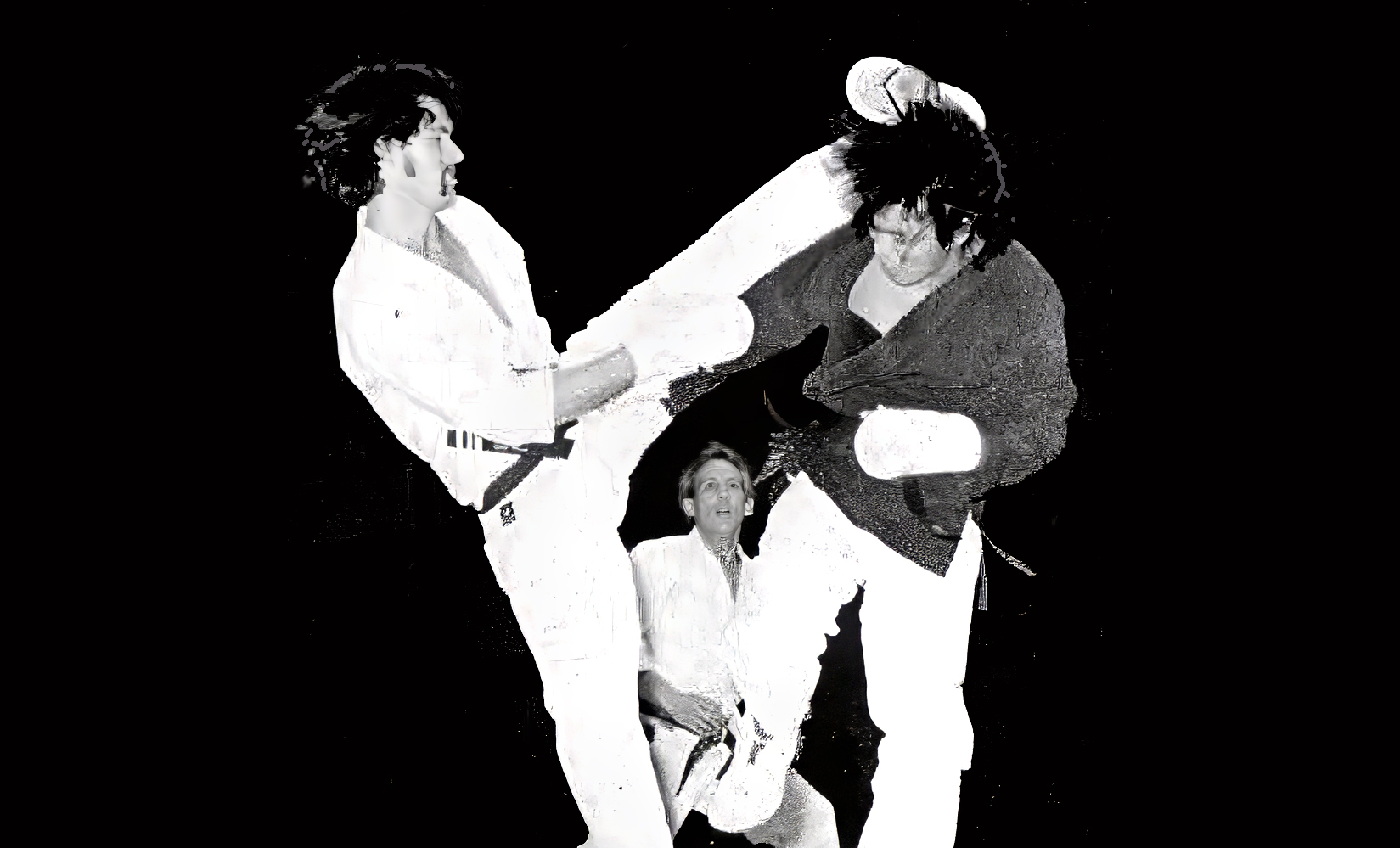
by Jim Butin
When people ask how sport, or tournament, karate began in America, I can only tell the story from my own experience as a competitor.
I wasn’t there for the early meetings, phone calls and discussions that established the rules. I hadn’t even started karate yet.
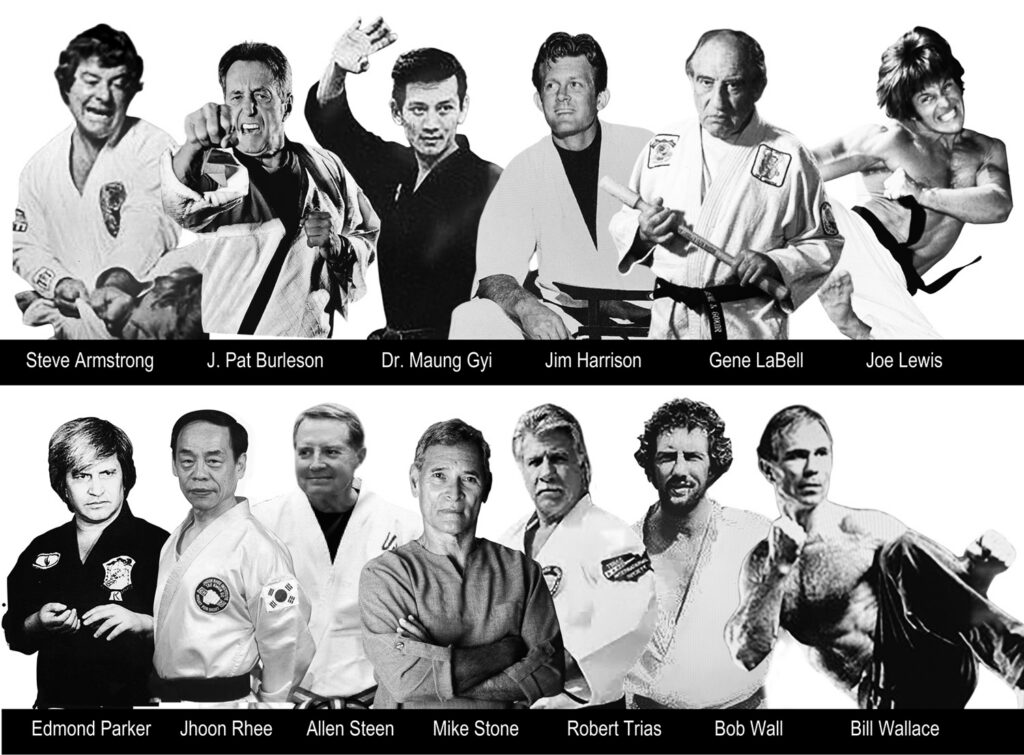
Pioneers such as Ed Parker, Allen Steen, J. Pat Burleson, Robert Trias, Jhoon Rhee, Jim Harrison and others helped establish the original structure for karate tournaments in America. Those early tournaments were influenced by events being held in Japan, Okinawa and Korea.
What I did get to see was what happened next.
I watched tournament karate change from the hard-contact events of the 1960s into the sport that developed during the 1970s and beyond.
And I had the bruises, stitches, broken bones and trophies to prove it.
I Didn’t Start Karate to Win Trophies
I began karate in November 1965 when I was 16 years old.
My instructor was J. Pat Burleson, who had become the first National Black Belt Fighting Champion in 1964 at Jhoon Rhee’s tournament in Washington, D.C.
But I didn’t walk into his school because I knew his reputation.
I started karate because I had seen kids being bullied in my high school in Fort Worth, Texas. I wanted to develop the skills to protect myself from the bad guys I saw bullying others.
At the time, I didn’t even know about Allen Steen’s U.S. Karate Championships being held in nearby Dallas.
By the time I earned my blue belt, however, I had developed enough skill to try tournament competition.
My first two outings weren’t exactly spectacular. I won only one match in each tournament.
But that was enough.I wanted to go back.
All I Wanted Was a Trophy
I had seen competitors carrying trophies out of tournaments, and I wanted one.
I didn’t care if it was third or fourth place. I just wanted a trophy.
That desire made me train harder and begin developing strategies for tournament competition.
By the time I reached brown belt, things had changed. I won or placed in six tournaments in the Brown Belt division.
Then my attitude changed too.
Third or fourth wasn’t enough anymore. Eventually, even second place wasn’t enough.
I wanted to win.
Karate Tournaments Were Different Then
The early tournaments I competed in weren’t like many of today’s events.
There were no junior divisions in the tournaments I attended. I competed against men in my belt division.
There weren’t nearly as many tournaments, either. If there was an event in Dallas, Fort Worth, Houston, Lubbock or Oklahoma City, I was there.
In the Texas tournaments, the philosophy was pretty simple:
Hit hard and attack fast.
Face contact was common in those early events. Nobody wanted competitors injured, but in the Texas region where I competed, contact was certainly part of the game.
If you argued with the judges over a point call, you could be immediately disqualified.
By the late 1960s and early 1970s, however, things began to change.
More women and children were entering tournaments, and concern about competitor safety was increasing. Rules restricting face contact began to appear.
Those changes would eventually transform the sport.
Welcome to the “Blood and Guts” Era
I was 6’2″, but I weighed only about 155 pounds.
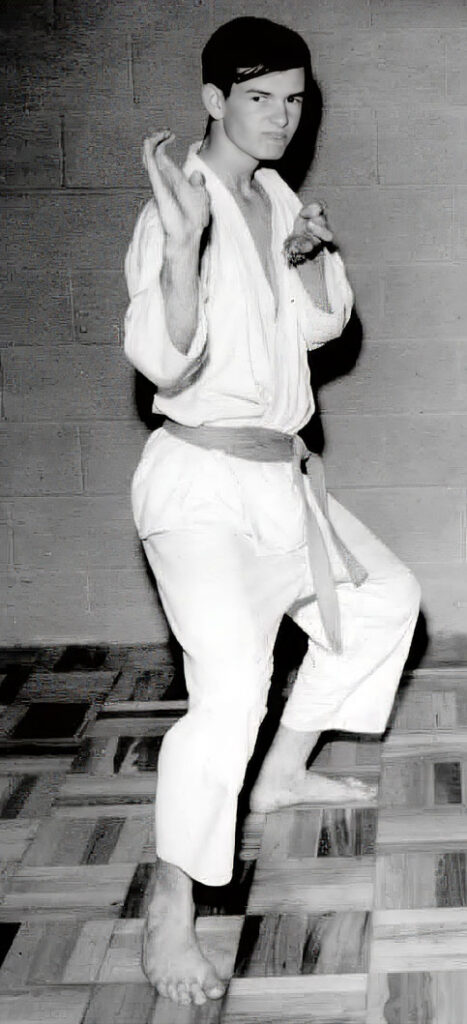
I wanted to fight lightweight.
That didn’t always happen.
Sometimes there weren’t enough heavyweight competitors, and an official would look across the room, see me and say something like:
“Get that tall guy over there and put him in with these heavyweights!”
The problem was that those 220-pound-plus fighters hit a lot harder than I did.
I learned quickly that trading punches with them was not a good idea.
But I also discovered something else.
I was faster.
I could use my reach and speed, avoid their attacks and score before they could use their power against me. Their greater size also gave me more target area.
So I learned to fight smarter.
That was tournament karate in Texas during what became known as the “Blood and Guts” era.
And sometimes there really was blood.
I Became Too Familiar With Emergency Rooms
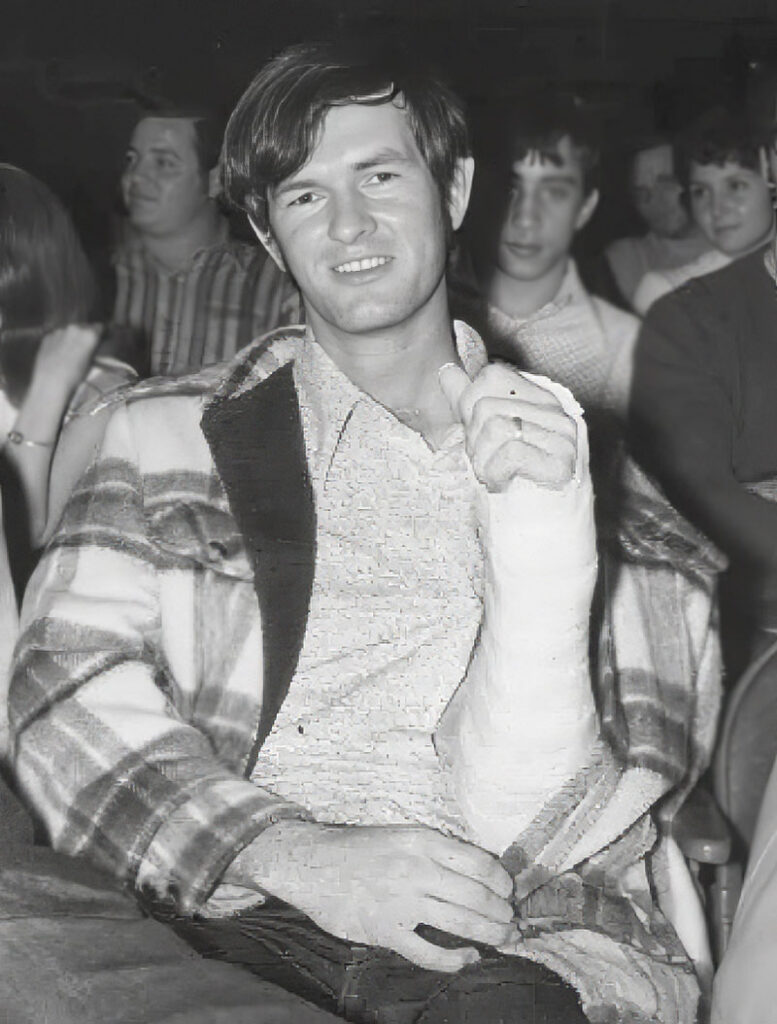
Over the years, I needed stitches over both eyes and under my chin.
Once my tooth went through my lip—which taught me the value of wearing a mouthpiece.
Then, at the 1972 U.S. Championships in Dallas, my arm was broken.
By 1973, I had been to enough emergency rooms that I began wondering whether I could afford to continue competing.
I made a deal with myself. I would fight in three more tournaments. If I was injured again during those three events, I was going to quit.
Fortunately, I wasn’t.
Instead, I won two first places and one second.
I decided maybe my run of bad luck was finally behind me.
Protective Equipment Began Changing the Sport
In 1973, Jhoon Rhee’s foam sparring equipment began coming into use.
For competitors accustomed to fighting with bare hands and feet, this was a major development.
I was certainly ready for it.
After all those cuts and emergency-room visits, anything that might reduce the injuries sounded pretty good to me.
The following year I saw another indication of just how new this equipment was.
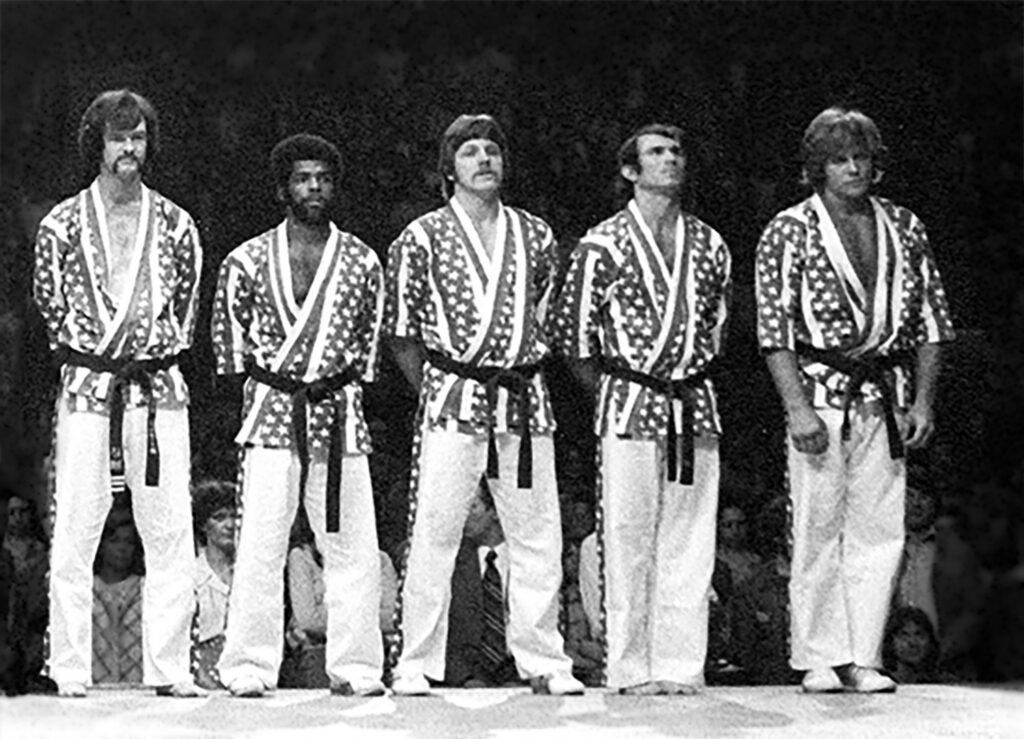
In 1974, I was selected for a U.S. team that traveled to Europe with Joe Lewis, Jeff Smith, Bill Wallace and Howard Jackson.
When we fought the German team in Berlin’s Deutschlandhalle, we had Jhoon Rhee foam equipment.
The German team didn’t.
They fought bare-handed and barefoot because the equipment was so new that they didn’t have it.
We were among the first Black Belts to introduce it to Europe.
The U.S. team won that match 24–0 and remained undefeated through our European events.
Sport Karate Kept Evolving
The rules continued to change.
By the middle 1970s, two-point scoring for kicks to the head began appearing. Some tournaments consequently moved to five-point matches.
In 1975, I introduced the two-point head-kick rule in Oklahoma at the Oklahoma State Karate Championships, which I promoted for many years.
Eventually, tournaments increasingly moved toward timed matches in which the competitor with the most points at the end won.
I had watched the sport evolve considerably from the tournaments I entered as a young blue belt.
But I was changing, too.
From Wanting a Trophy to Winning National Championships
Remember that kid who just wanted any trophy?
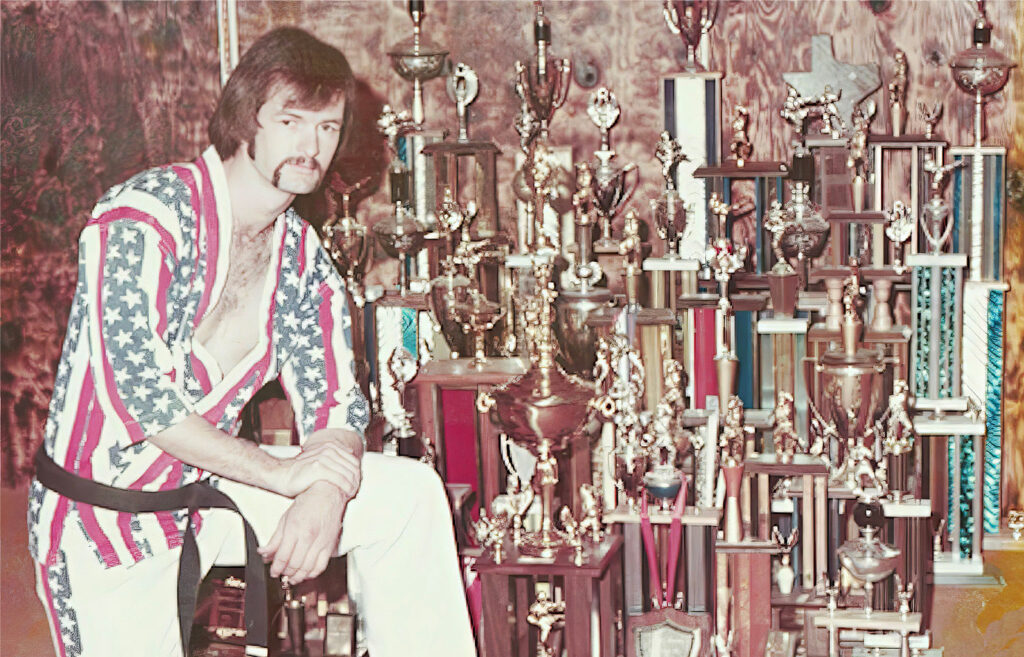
By 1974, he had changed quite a bit.
That year I won my first National Championship at the Top Ten Nationals in St. Louis, defeating John Natividad and Jeff Smith and becoming Grand Champion.
In 1975, I won the Light Heavyweight division for my second National Championship.
I won the Light Heavyweight National Championship at the Battle of Atlanta in 1976.
My fourth and final National Black Belt title came in 1980 at Roy Kurban’s Fort Worth Pro/Am Karate Championships.
But eventually something happened that I never expected.
The Day I Knew It Was Time to Quit
I continued competing in Oklahoma tournaments in the executive division for Black Belts over 35, although I gradually stopped traveling around the country for national events.
My priorities were changing. I had my karate schools and my business to run.
And gradually, my desire to compete began fading.
Then came my final tournament in 1993.
I was preparing to fight for first place. My opponent was pacing the floor. He looked extremely determined to beat me.
I looked at him. And I realized…
I was thinking about going fishing.
I won first place that day. But something was different.
For years, I had possessed a tremendous desire to win.
Now I simply expected to win.There is a difference.
And when I recognized it, I knew it was time.
That became my last tournament.
I Was Fortunate Enough to Watch the Sport Grow Up
When I think back to that 16-year-old kid who walked into J. Pat Burleson’s karate school in 1965, I certainly couldn’t have imagined where karate would take me.
I watched tournament rules change.
I watched safety equipment appear.
I watched scoring systems evolve.
I competed when karate tournaments could be pretty rough, and I competed as the sport became increasingly organized and sophisticated.
I represented the United States at the first World Taekwondo Championships in Seoul in 1973, where our team won the silver medal.
A year later, I traveled through Europe with some of the greatest fighters of our generation, as a part of the Dream Team.
Jim Butin, Howard Jackson, Jeff Smith, Bill Wallace, Joe Lewis.
I won championships, lost championships, got knocked around, learned from some remarkable martial artists and made friendships that lasted a lifetime.
I didn’t invent sport karate.
The pioneers who came before me laid its foundation.
But I was fortunate enough to be there while it was growing up.
And I wouldn’t trade those years for anything.
— Jim Butin