
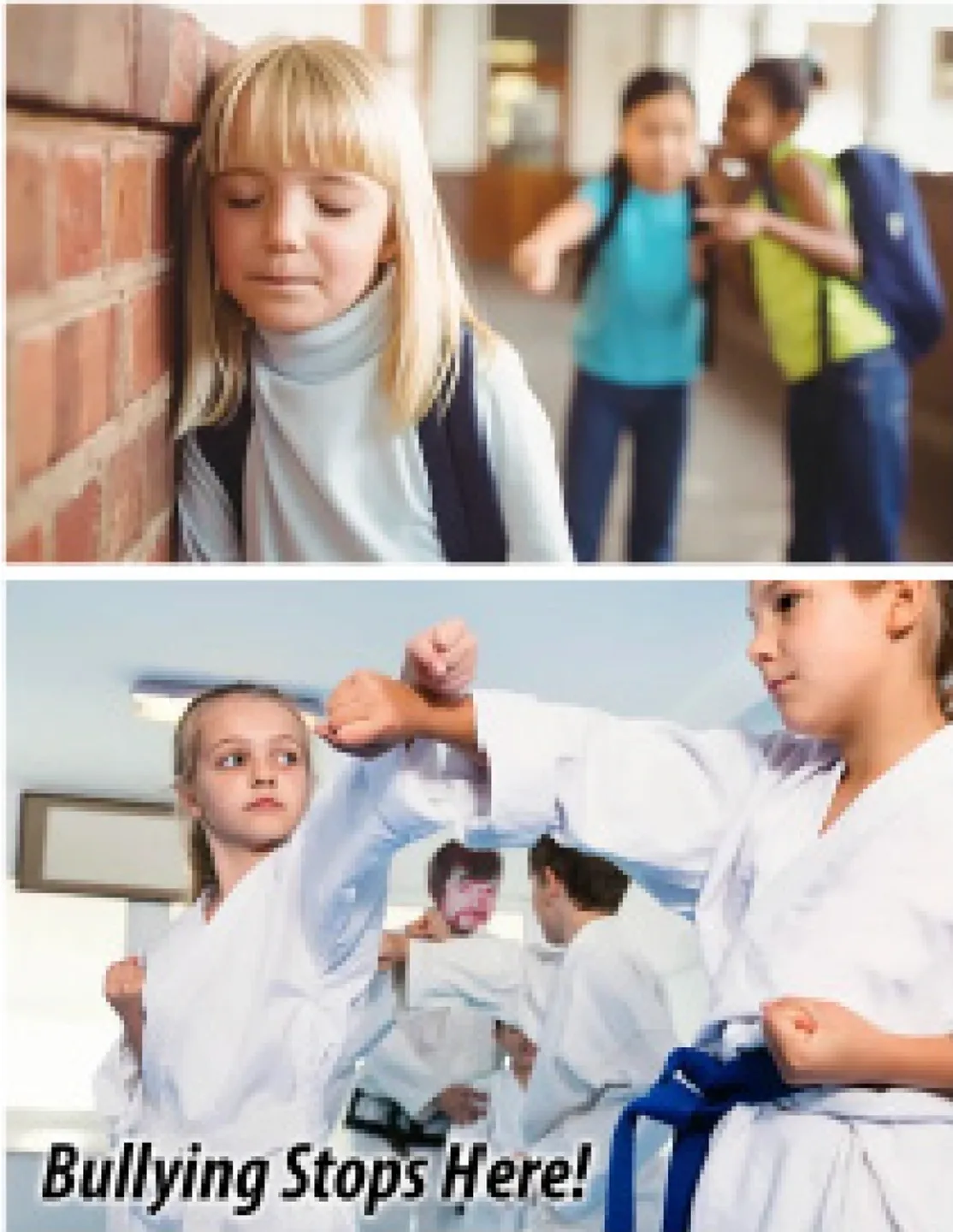
Bullying Stops here!
Confidence Can Change the Way a Child Faces a Bully
For nearly five decades, Grandmaster Jim Butin worked with children and families through martial arts. During those years, he saw something happen again and again: as children developed martial arts skills, they also developed confidence.
That confidence can make an important difference when a child is confronted by a bully.
Martial arts isn't about teaching children to solve every problem by fighting. It teaches them to be aware, remain calm, control their emotions and have the confidence to stand up for themselves.
A child doesn't have to be the biggest or toughest kid in school.
Sometimes the greatest defense against a bully begins with simply not being afraid.
Why Confidence Matters
Bullying is complicated, and there is no single answer that works for every child or every situation. But during my 47 years of teaching martial arts, I saw one thing make a remarkable difference in children again and again:
Confidence.
Bullies often look for someone they believe they can intimidate — someone who appears frightened, uncertain or unlikely to stand up for themselves.
Martial arts training can help change that.
As children learn new skills, overcome challenges and progress through their training, they begin to see themselves differently. They stand a little taller. They speak with more confidence. They learn to remain calm under pressure and to think before they react.
That doesn't mean a confident child will never encounter a bully. It means that child may be better prepared to handle the situation — whether that means walking away, getting help, defusing the confrontation or, when absolutely necessary, protecting themselves.
The goal isn't to create children who want to fight.
The goal is to develop children who have the confidence not to be controlled by fear.
How Can Martial Arts Help Build a Child's Confidence?
Confidence doesn't appear overnight. It grows through experience.
In martial arts, children are given challenges they can learn to overcome. They learn a new technique. They earn a new belt. They discover that something that seemed difficult a few weeks ago is now something they can do.
Each small success teaches a child, “I can handle this.”
A good martial arts instructor helps children discover their strengths while teaching them discipline, awareness and self-control. As their skills improve, their confidence often grows with them.
That confidence can carry far beyond the martial arts school.
When confronted by a bully, a child who has learned to stay calm under pressure may be better prepared to think before reacting. They can use their voice, walk away, seek help or try to defuse the situation rather than immediately responding with fear or anger.
And if a physical confrontation cannot be avoided, martial arts training can give a child both the skills to protect themselves and the judgment to understand when those skills should be used.
The real power of martial arts isn't teaching a child how to fight. It's helping a child discover that they are capable, confident and stronger than they thought they were.
A Resource for Parents, Teachers and Martial Arts Instructors
Stop Bullying... the Power of Martial Arts
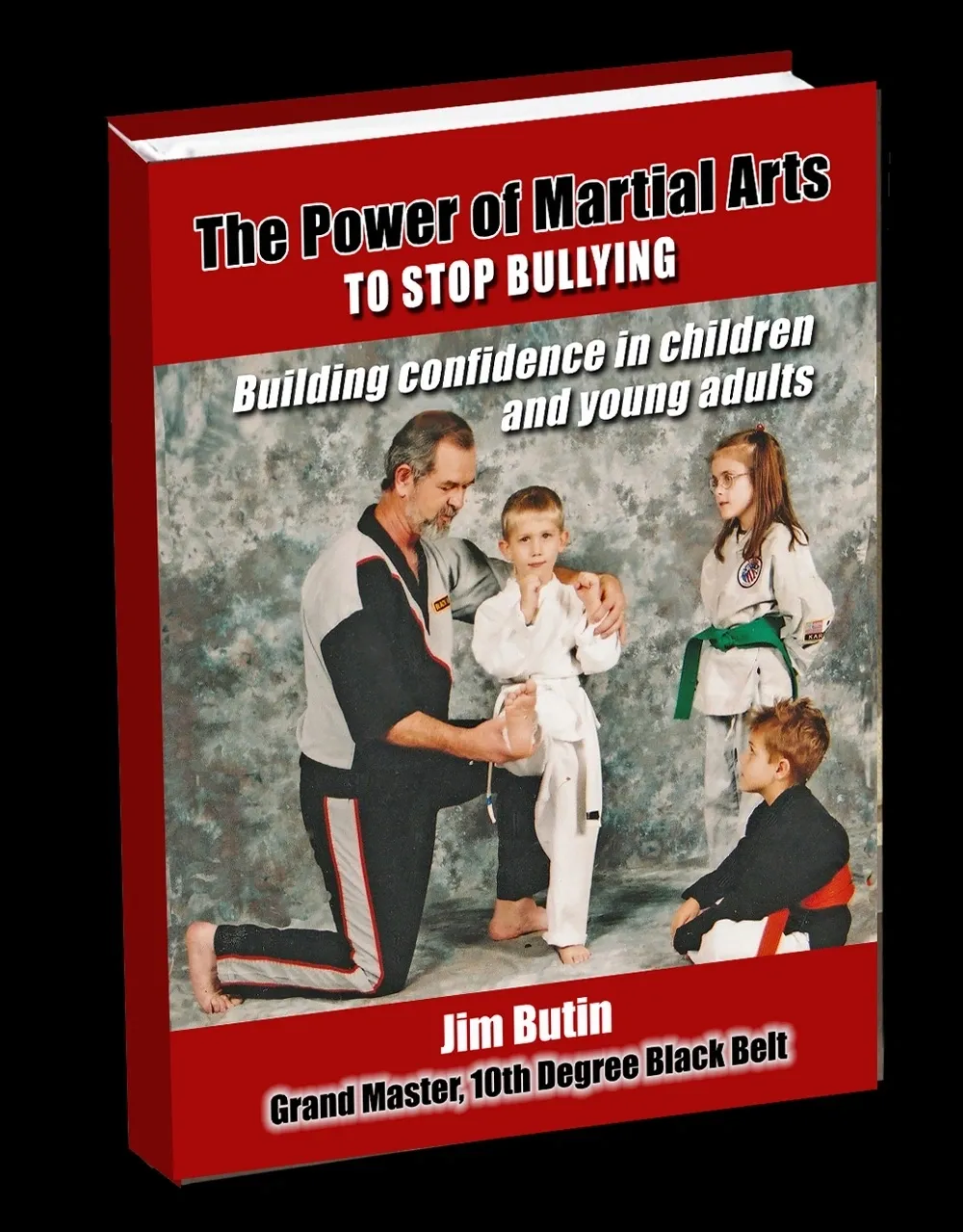
After 47 years of teaching martial arts, I wanted to put what I had learned about children, confidence and bullying into a resource that parents and others who work with children could use.
Stop Bullying... The Power of Martial Arts explains how martial arts training can help children develop the confidence, awareness and self-control they need when confronted by bullying.
The goal is not to teach a child to fight.
It is to help children understand how to avoid confrontation when possible, how to stand up for themselves with confidence, and how to protect themselves when there is no other choice.
The lessons in this book grew out of real experiences with children and families during nearly five decades of teaching martial arts.
Because sometimes the most important thing we can give a child isn't another way to fight — it's the confidence to know they don't have to be afraid.
Learn More About the Book
Stop Bullying... The Power of Martial Arts is available on Amazon.
Real Testimonials
Many parents have contacted me long after their kids have finished in their pursuit of belt advancement and personal successes in the martial arts to inform me as to how valuable they believe the martial arts had been toward the maturation of their children.
A Parent's Perspective
Lisa Hall had two boys, Blake and Colby Hall, who had both achieved their black belts in our system back in the 90’s when they were 12 and 11 years old. She stopped me at the pharmacy recently to praise the results of our membership and the impact that it had on her two boys. She indicated that she believed that the martial arts program from National Karate was the single most important activity in her two boy’s life to give them the success that they enjoyed through public school, college and now adulthood in raising their families.
Diplomacy From a Position of Strength
Ken Smith the former mayor of Yukon, Oklahoma adds “My name is Ken Smith and I am a second degree black belt under Master Jim Butin. I have two daughters that have achieved advanced ranks under Mr. Butin’s tutelage as well. Though there are many worthwhile phases of our training, the bully diffusion curriculum is one of my favorite for our students. The program built confidence in both of my daughters. They learned ways to initially deescalate a confrontation before it became violent. I consider it diplomacy from a position of strength. My girls are grown now and the techniques that they learned continue to benefit them even in adult life. I am happy to endorse Master Butin and strongly recommend the “Bully Diffusion” program to all parents.”
Confidence That Reaches Beyond the Dojo
Tom Steece, a noted local attorney states. "The entirety of training and skills my children leaned from the study of martial arts helped each with their self-esteem, self-confidence and all aspects of everyday life. When confronted with issues such as bullying, each responded in an appropriate and acceptable manner."
The Martial Art Code of Conduct
Building Character Through Martial Arts
For 47 years, I owned and operated a martial arts school. Teaching children how to kick, punch and defend themselves was only part of our responsibility.
We wanted our students to become confident young people who understood respect, responsibility, loyalty, honesty and self-control.
Every day in class, our young students were reminded of ten simple principles.
1. Show Respect to Your Elders
Address adults with respect. Courtesy is one of the first lessons of martial arts — and one that should extend far beyond the dojo.
2. Respect the Place Where You Learn
Bow when entering and leaving the training floor. It is a reminder to appreciate the opportunity to learn and improve.
3. Respect Your Instructor
Show respect to the person who teaches, guides and helps you grow.
4. Show Appreciation to Your Parents
Practice simple acts of courtesy at home. Greet your parents, talk to them and let them know they are important to you.
5. Accept Correction With a Good Attitude
Parents, teachers and instructors correct us because they want us to improve. Learn to listen, accept guidance and try again.
6. Listen to Your Conscience
Before acting, ask yourself whether what you are about to do is right. Self-control means making a good decision even when no one is watching.
7. Be Loyal to Your Friends
Don't join in when others are being ridiculed or treated badly. Have the courage to stand up for someone who needs a friend.
8. Be a Good Citizen
Respect your community and your country, and look for ways to make the world around you better.
9. Always Try Your Best
Whether it's martial arts, school, sports or something else you choose to pursue, give it your best effort.
10. Live Honestly and Find Happiness
Be truthful. Treat people well. Appreciate each day and try to leave a positive influence on the people around you.
The Lesson Behind the Code
These principles were never separate from our martial arts training. They were part of the training.
A child who learns self-defense also needs to learn when not to use it. A child who develops physical confidence must also develop judgment, compassion and self-control.
That is what martial arts should teach.
The goal isn't simply to develop better fighters.
It's to develop better people.